You don't need to plan your wedding around a camera, and I'd never ask you to. But a handful of small decisions - most of them made months before the day - decide whether your film sounds clear, shows your venue at its best and catches the moments you care about.
Timing is a big part of it, and I've written a separate guide to building your wedding day timeline. This one covers everything else.
Sound is half the film
Pictures are forgiving. Sound isn't. A speech you can't hear is a speech you've lost, so this is where a little planning goes furthest.
- Give speakers one spot. I clip a small recorder to the groom's jacket and set one at the lectern, so the best place to give a speech is where the recorder is. Speakers who wander around the room are the hardest to record well.
- Use the microphone if there is one. If your venue has a PA, use it. When the room can hear the speech, you get the laughs and reactions on film too.
- Vows: face each other and slow down. Nerves make everyone rush. Saying them to each other rather than to the floor makes them clearer on film and lovelier to watch.
Think about where everyone will be standing
- Behind your officiant. The space behind the two of you appears in almost every ceremony shot. If you can, keep it clear of stacked chairs, signage and the fire exit.
- The first kiss. Ask your officiant to step to one side for it, so they're not standing right behind you in the moment you'll most want to see.
- The top table. Where it sits relative to the windows decides how faces look during the speeches. Window light from the side is beautiful. A top table with its back to a bright window turns everyone into a silhouette.
- Ceremony rules. Churches and some registrars have rules about where cameras can be during the ceremony. Ask early and let me know, so I can plan my positions before the day rather than on it.
Plan the evening light, not just the daylight
Golden hour gets all the attention (there's more on it in the timeline guide), but the evening is where a lot of films are won or lost.
- Warm light beats coloured washes. A dark room lit only by coloured disco lights looks moody in person and murky on film. Fairy lights, candles and warm uplighting give the evening depth.
- Ask for some light on the first dance. If your DJ or band brings lighting, ask them for some warm or white light on the dance floor for the first dance.
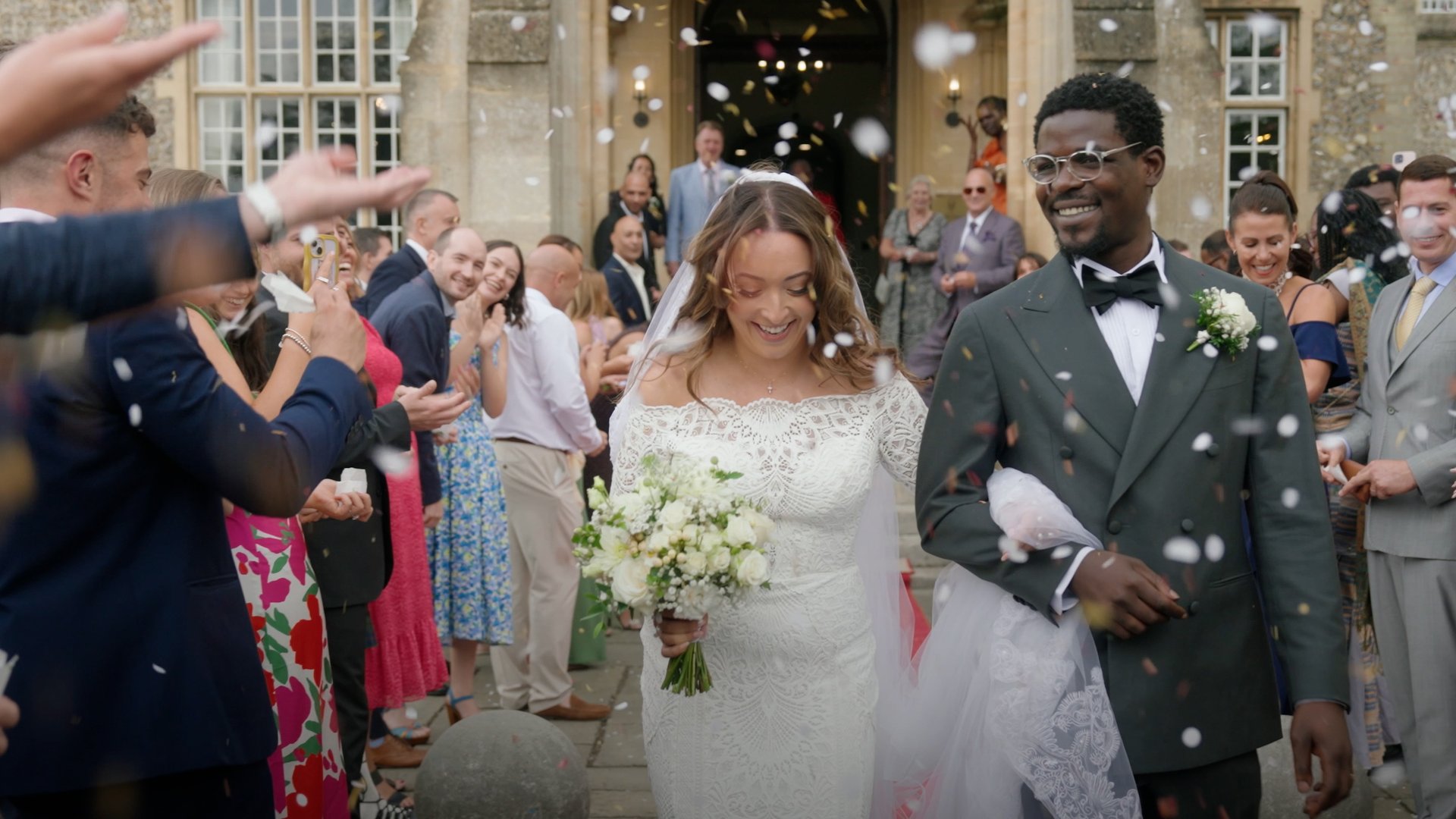
- Confetti in hand before you walk out. Make sure guests have it ready before you leave the ceremony, then walk slowly. It's over in seconds otherwise.
Tell me who matters
The pre-wedding call is where I learn who your people are: the nan who's flown in, the friend giving a surprise reading, the uncle who'll start the conga. Some of the best moments in any film are reactions, and I can only be pointed at the right faces if I know whose they are.
A short list of names, and who they are to you, helps more than you'd think. So does telling me about any surprises, so I'm in the right place when they happen.
The small things worth having ready
- Letters and gifts. If you're exchanging letters or gifts in the morning, plan to open them while I'm with you. It's some of the most moving footage of the whole day.
- Details in one place. Rings, invitations, the perfume or the cufflinks - gather them together for the morning so they're easy to film without anyone hunting for them.
- Phones away for the ceremony. You don't have to go fully unplugged, but a gentle request makes a real difference. Here's how to do it without awkwardness.
- A first look, or not. Both work on film. If you're undecided, read the pros and cons from behind the camera.
Have a plan B for the weather
Know where the ceremony moves if it rains, and tell your suppliers in advance. Rain isn't a disaster on film - umbrellas and a wet terrace can look beautiful. A last-minute scramble to move a hundred chairs is what eats into your day. And if it's wet or windy, the drone stays on the ground, which is another reason to have a good plan for the ground.
Let your suppliers talk to each other
Share your running order with everyone, and introduce your photographer and videographer before the day. We'll agree who stands where for the ceremony and speeches, so neither of us ends up in the other's shots - and you don't have to manage any of it.
None of this means a different day
Every point above is a small decision, not a change of plan. If you're planning now and want a second pair of eyes on any of it, that's exactly what the pre-wedding call is for. Check your date, tell me about your venue, and I'll come back to you within 24 hours.
Common questions
Do we need to change our wedding plans for the videographer?
No. A good videographer works around your day. The tips here are small choices - where speakers stand, how the evening is lit - that make the film better without changing the day itself.
Where should speeches happen for the best video?
In one spot, ideally where the speaker is lit from the side rather than from behind, and near the microphone or recorder. Speakers who stay put are much easier to record clearly.
What should we tell our videographer before the wedding?
Your running order, the people who matter most, any surprises, and any rules from your venue or officiant about filming during the ceremony.